Independent Opposition Analysis
Liverpool in the 2019 Champions League Final
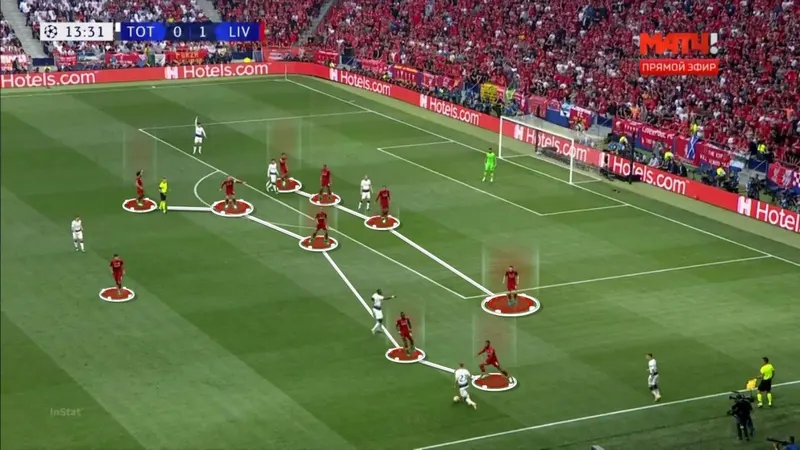
How Liverpool won the final with 39% possession. A compact 4-5-1, direct play from the back and pressing on clear cues.
- Shape
- Build-up
- Pressing
- Transitions
Scouting and opposition analysis share one discipline: describe what you saw, explain why it matters and make a recommendation someone can act on.
Player reports are written evidence, not a single number. Each one covers the profile, technical, tactical, physical and behavioural observations, strengths, development areas, positional suitability, game-model fit and a projection.
Recommendation scale
Monitor
Interesting profile. Keep watching over more matches before acting.
Further Assessment
Strong indicators. Needs live viewing or a second scout's opinion.
Strong Interest
Clear fit for the role and level. Recommend progressing.
Every opposition report covers the same areas so staff know where to look.
All reportsBase formation and how it changes in and out of possession.
Goal kicks, first phase, progression routes and rotations.
Chance creation, final-third patterns, width and box occupation.
Block height, compactness and defensive tendencies.
Triggers, responsibilities and where the press can be broken.
First actions after a regain.
Reaction after losing the ball.
Attacking and defensive corners, free kicks and second phases.
Players with major tactical influence.
Repeatable behaviours that consistently produce an advantage.
Repeatable behaviours an opponent can exploit.
How I would prepare a team to play against them.
Data supports observation; it does not replace it. Every chart I publish answers one question: what does this mean in football terms?
Start with a football question, then choose the metric that answers it.
Opponent strength, game state and minutes played change what a number means.
A number points to where to look. The footage confirms or rejects it.
Available for coaching, analysis and football-development opportunities.