Independent Opposition Analysis
Liverpool in the 2019 Champions League Final
How Liverpool won the final with 39% possession. A compact 4-5-1, direct play from the back and pressing on clear cues.
- Match
- Tottenham 0-2 Liverpool
- Date
- 1 June 2019, Madrid
- System
- 4-3-3, 4-5-1 without the ball
- Written for
- PFSA Opposition Analysis Level 2
Overview
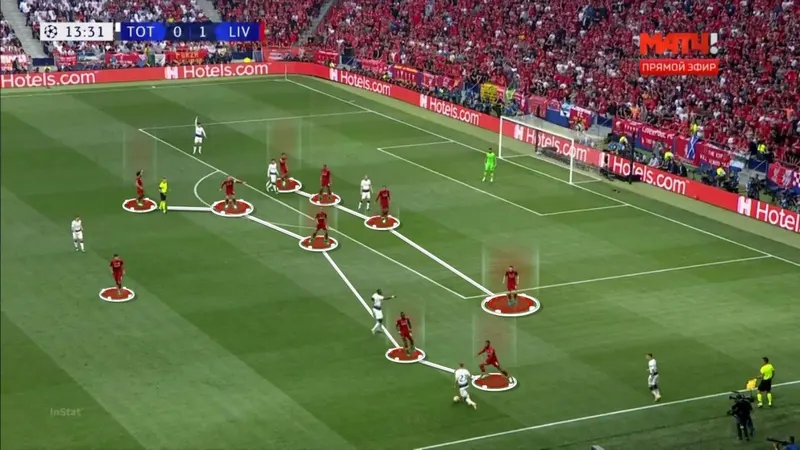
The early penalty changed the match. Liverpool did not need the ball and were comfortable letting Tottenham circulate in front of them. The priorities were protecting the centre, keeping the lines close and controlling Tottenham's key receivers.
Once 1-0 up, their decisions became risk-aware rather than passive: defend the centre, press only on good cues, play forward early and keep enough players behind the ball to control Tottenham's transitions.
| Category | Tottenham | Liverpool |
|---|---|---|
| Possession | 61% | 39% |
| Attempts | 16 | 14 |
| On target | 8 | 3 |
| Passes | 528 | 280 |
Purpose of the reportAssess Liverpool's tactical behaviour, key strengths, exploitable spaces, set-play habits and individual contributions in the 2019 Champions League final.
Shape
Liverpool started in a 4-3-3 with Fabinho at the base of midfield, Henderson to the right and Wijnaldum to the left. Without the ball the wingers dropped and Liverpool often defended with five across midfield.
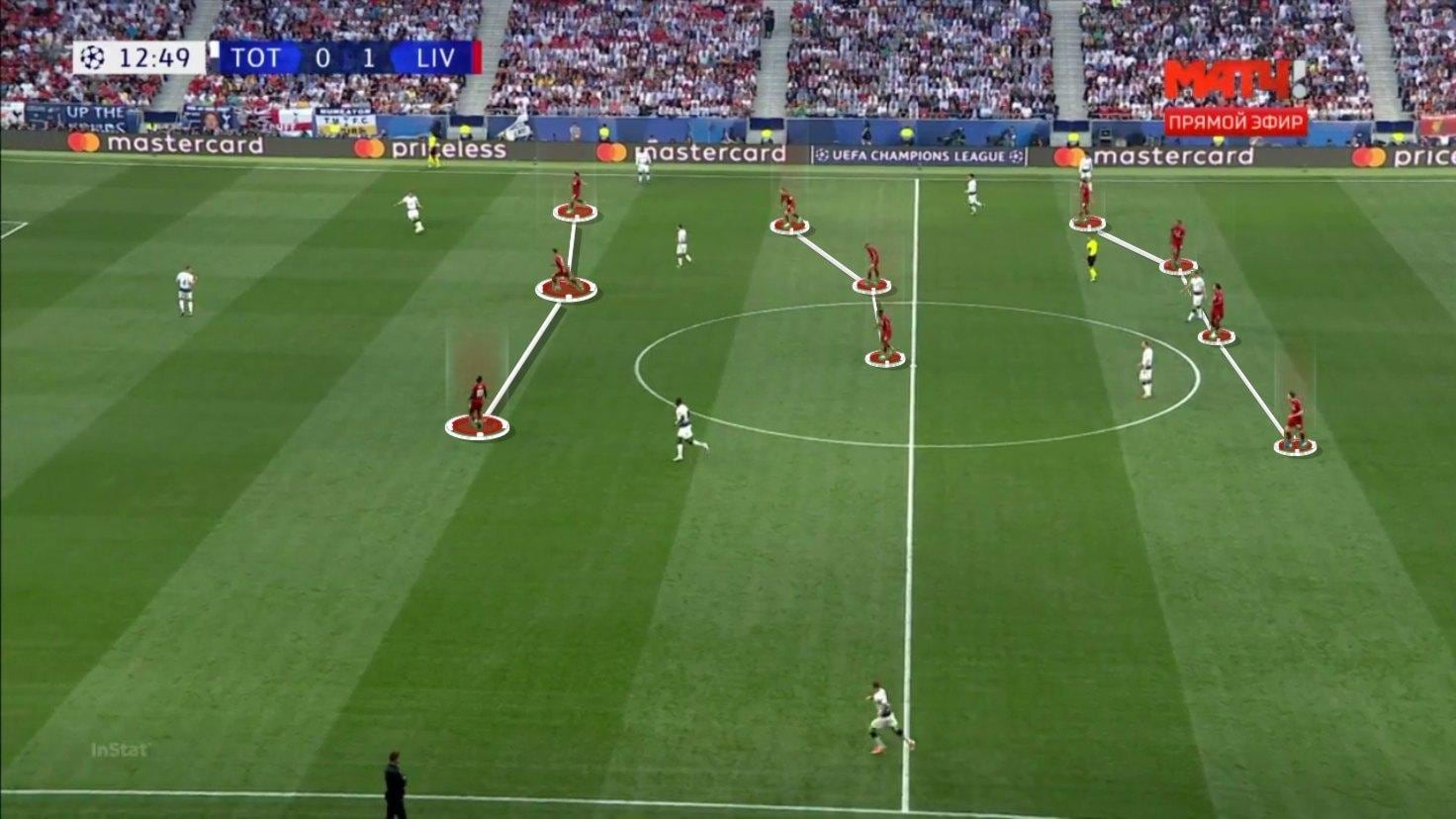
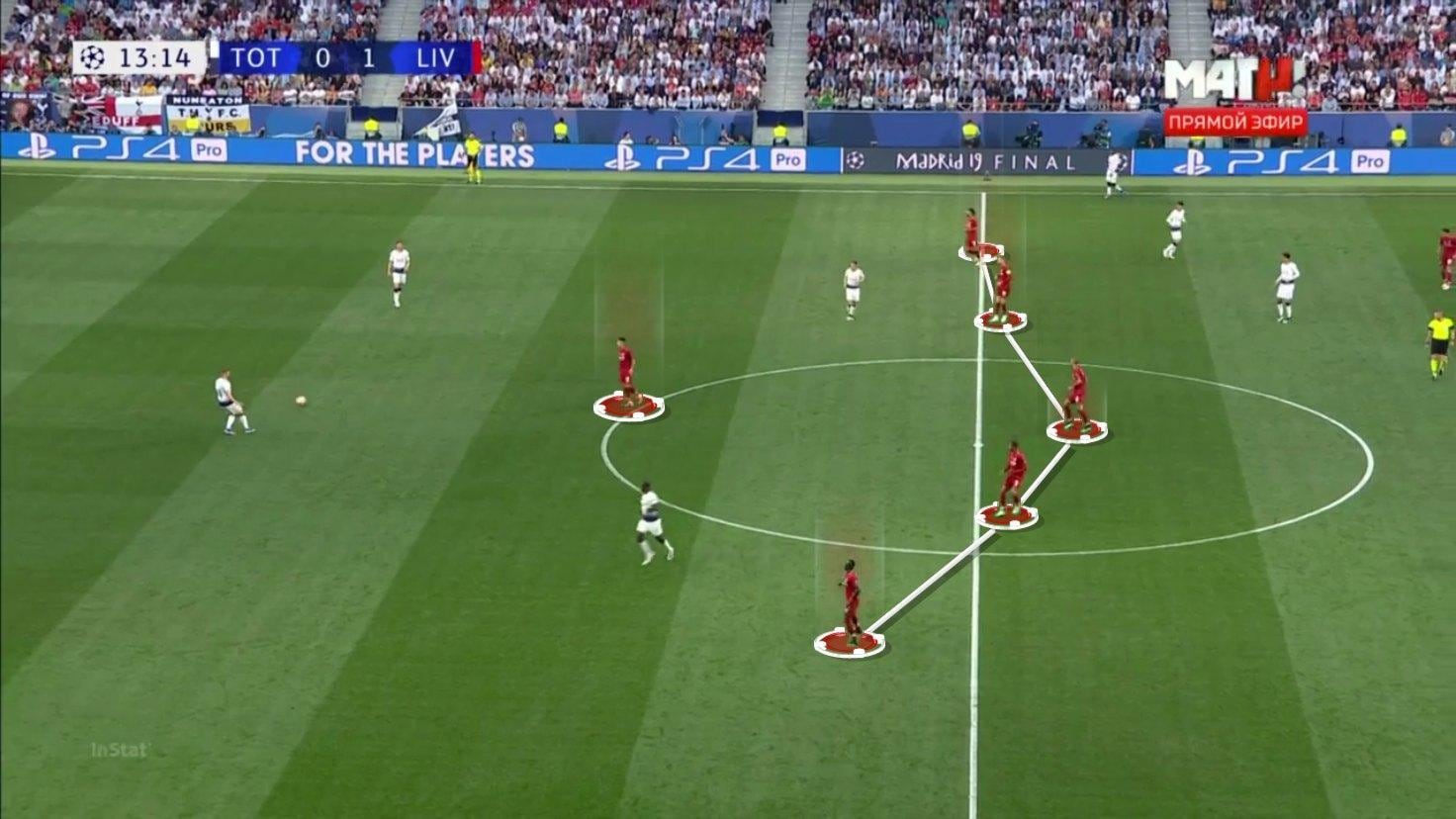
- Central compactness came first. Low-risk circulation outside the block was allowed.
- The far-side midfielder narrowed early instead of staying near the touchline.
- Fabinho protected the space in front of the centre-backs and reacted to second balls.
Build-up
Liverpool did not insist on a short build-up. Against an organised Tottenham press, one centre-back became the distributor and played early into the channel or onto a forward against the back line.
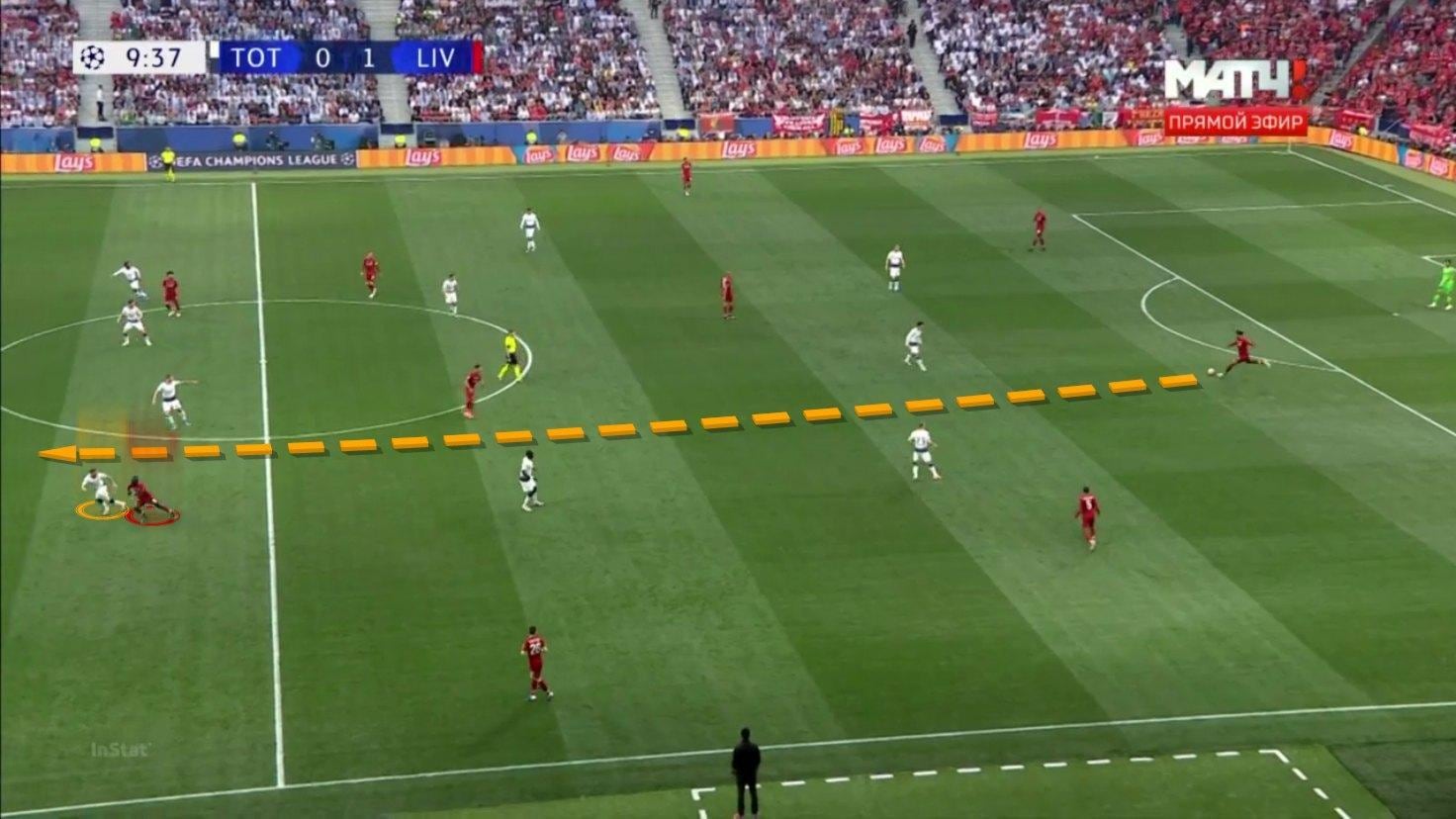
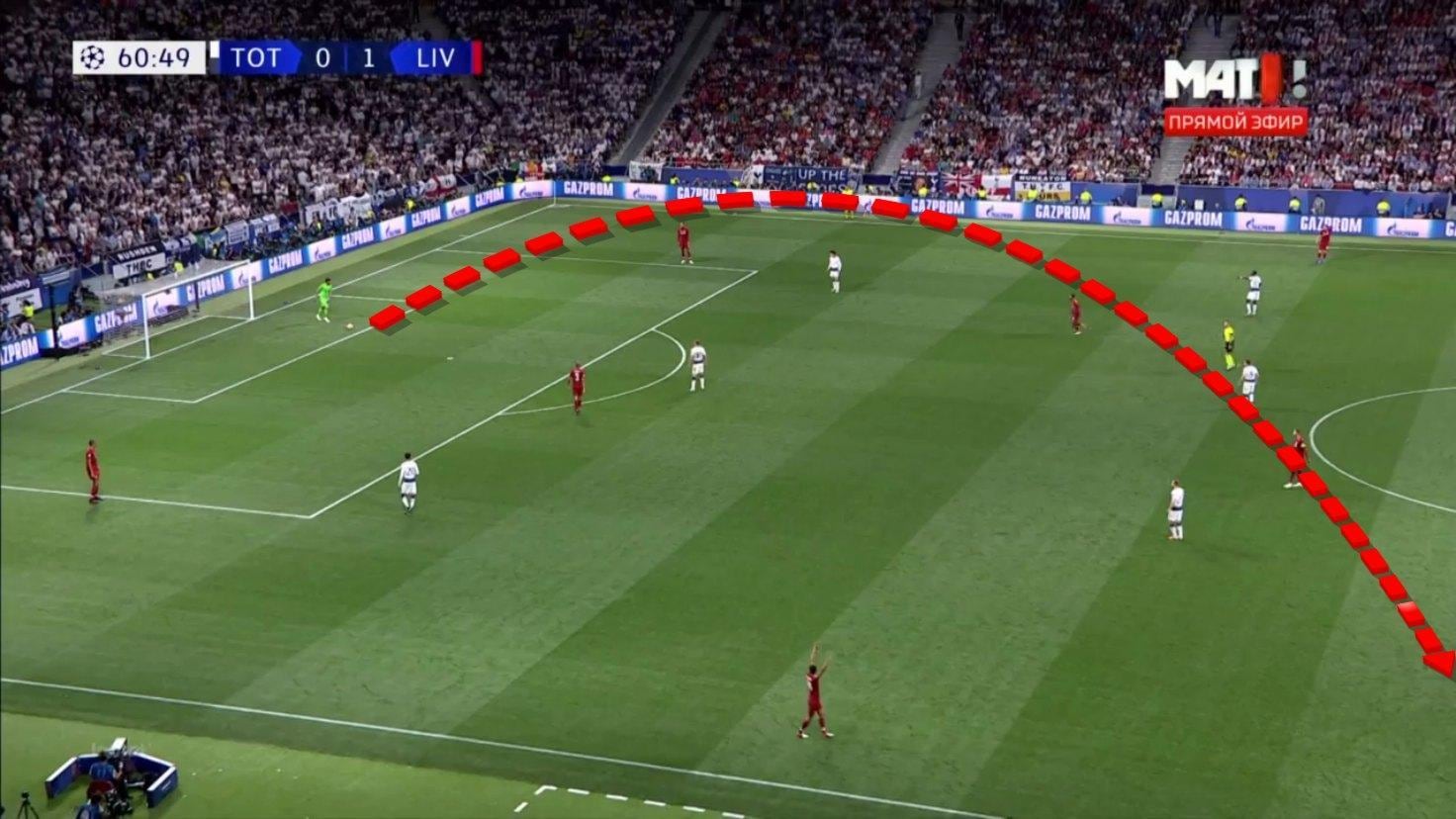
- Bypass Tottenham's first two pressing lines in one action.
- Create a duel against the full-back or outside centre-back.
- Keep a midfielder underneath the duel for the second ball.
Pressing
Liverpool did not press every possession. They screened central options, allowed safe passes and accelerated when the ball entered a pressable area.
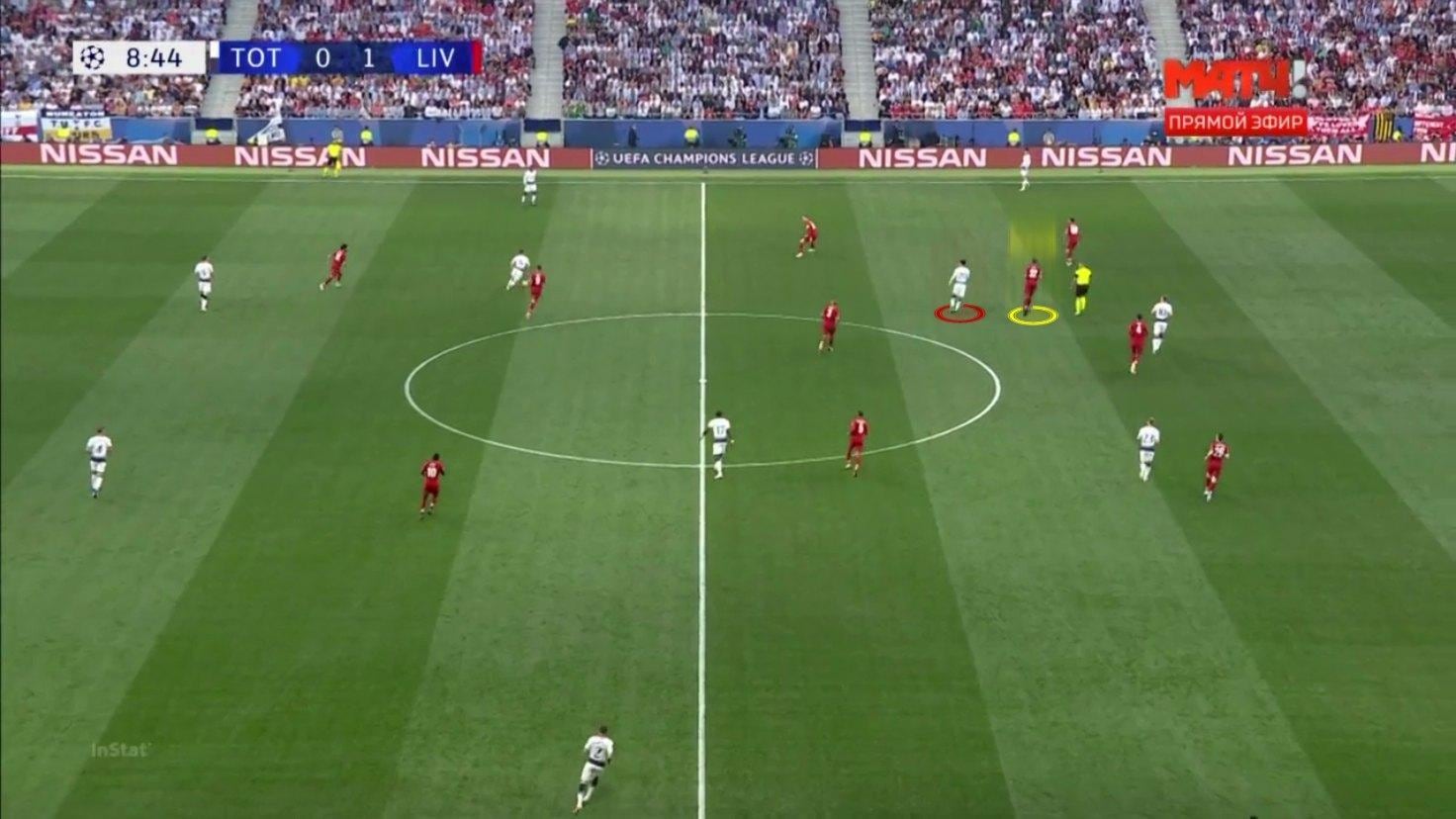
- Back pass: the front line steps up and midfield closes the next lane.
- Wide receiver tight to the touchline: the winger presses from outside in while a midfielder covers the inside pass.
- Pass into the No. 10: a centre-back steps out if cover is in place.
Transitions
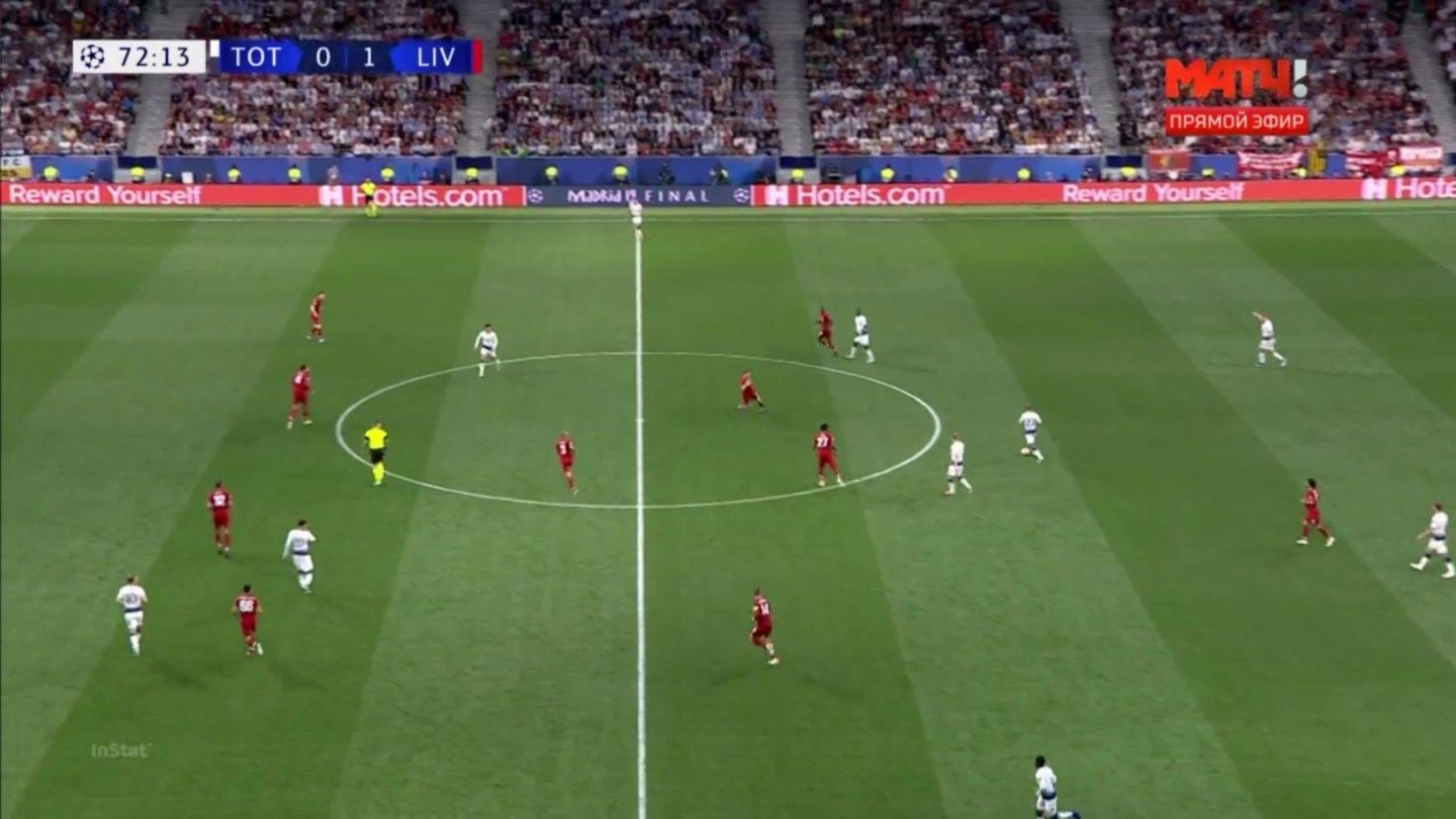
After a regain the first look was forward, into Salah, Mané or the channel. After a loss, the nearest player pressed if support was close. If that first press was beaten, Liverpool recovered into the 4-5-1 rather than chase.
Set plays
Defending corners, Liverpool mixed zonal cover in the six-yard corridor with contact on key runners. Attacking, the clearest lesson was the second phase: Tottenham cleared the first ball badly, Liverpool kept players around the box and Origi scored the 2-0.
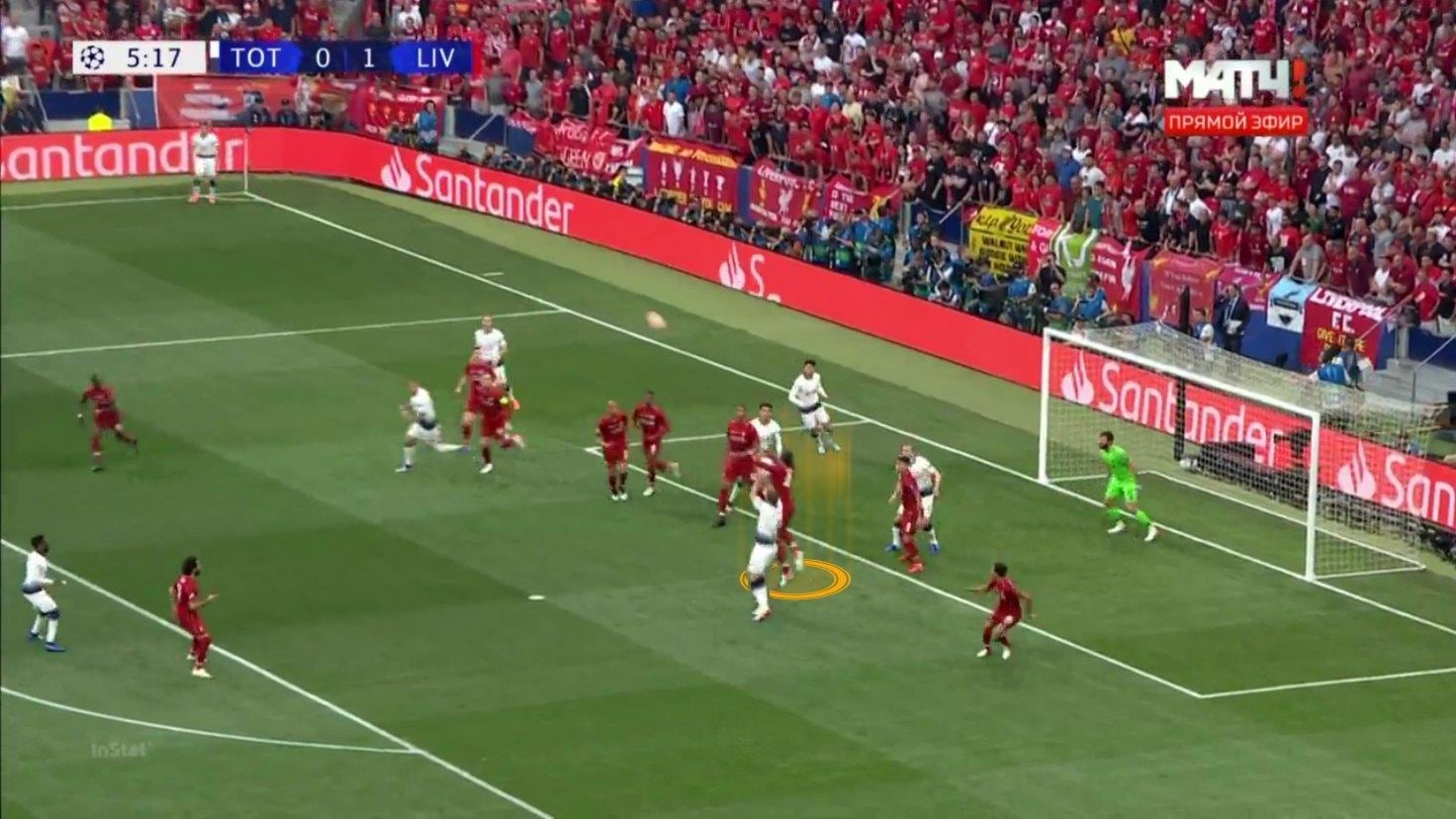
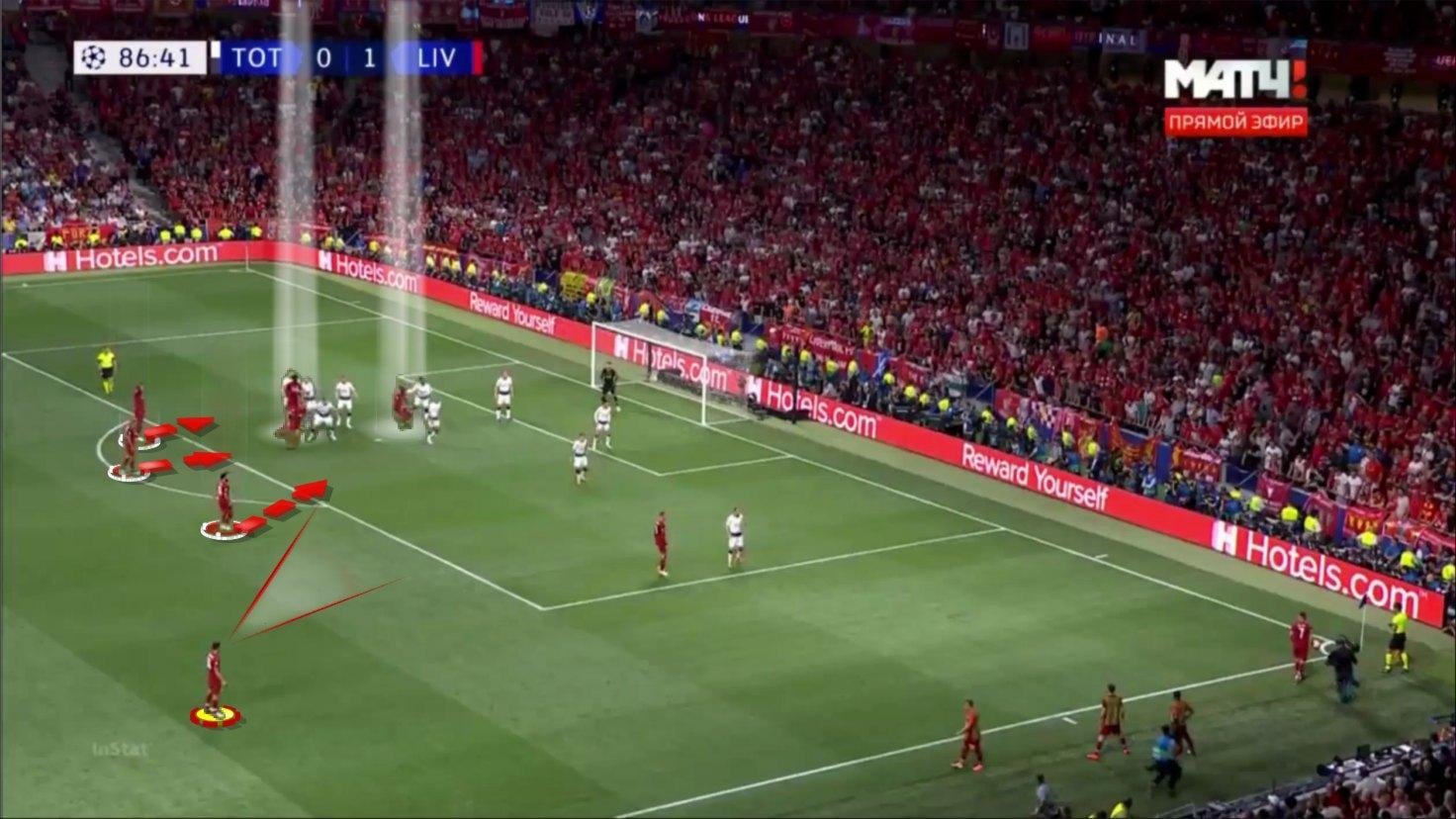
- Van Dijk and Matip are the main threats at the first contact.
- Players stay around the box after the first delivery.
- The second ball needs the same discipline as the first.
Key players
Alisson
9.0
Goalkeeper
Eight saves. Calm under late pressure.
Van Dijk
8.5
Left centre-back
Dominant in the air and cleared the key set plays.
Fabinho
8.0
Defensive midfield
Screened the central lane and won second balls.
Origi
8.0
Substitute
Direct runner in behind. Decisive finish for 2-0.
Ratings are scouting judgements, not media scores.
Strengths and weaknesses
Strengths
- Central compactness and a disciplined 4-5-1 recovery
- Aerial control through Van Dijk and Matip
- Direct transition threat through Salah, Mané and Origi
- Strong reaction to second balls around direct passes
- Managing a favourable game state
Weaknesses
- Space behind the outside midfielder when he jumps
- The far-side full-back after quick switches
- Gaps when the first press is beaten by a third-man action
- The front line can become separated when they go very direct
How to play against them
Liverpool can change behaviour without losing structure. They press in a 4-3-3, recover into a 4-5-1 and play direct from the back while still keeping players under the ball for the second action.
The way to attack them is to move the block sideways, use third-man combinations when the outside midfielder jumps, and switch quickly into the far-side channel. In the final third, cut-backs and late runners work better than high crosses. At set plays, the second phase is part of the same action.
Method
- Match
- Tottenham 0-2 Liverpool, UEFA Champions League Final, 1 June 2019
- Framework
- PFSA opposition report: shape, build-up, pressing, defensive block, transitions, set plays, players, strengths and weaknesses.
Independent analysis. Not commissioned by or affiliated with Liverpool.